


|
|
 In English
 Suomeksi
External views
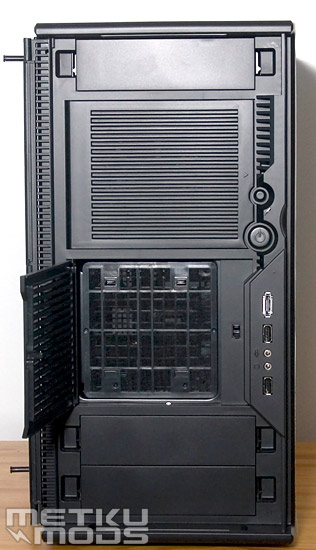
The front panel connectors have gone through some changes as well, and now instead of a firewire connector, Antec has decided to add an e-Sata connection to the front panel. This is a good change as e-Sata drives are becoming more and more popular. The dust filter doors closely remind of the previous models, but the way how the 5,25" bays are located is new. The bottom chamber takes all its air through the floor, so the lower part of the front panel is free to be used for 5,25" bays.
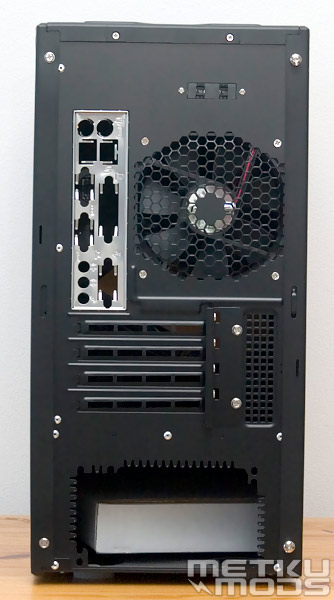
In a sense the Mini sits in the same category with the NZXT Rogue we reviewed earlier, because it houses a mATX-motherboard and a full sized ATX powersupply. This combination makes a lot of sense, as modern motherboards have pretty much everything integrated. If the only card a user wants is a graphic card, then why go with a full-sized motherboard? Anyway with all the ventilation the case can handle even the hottest running hardware of today. Talking of ventilation, one can see the controllers for the two fans right on top of the 120 mm Tri-cool. The right side panel is held in place with two normal screws, but large thumbscrews are used for the more often opened left side panel.
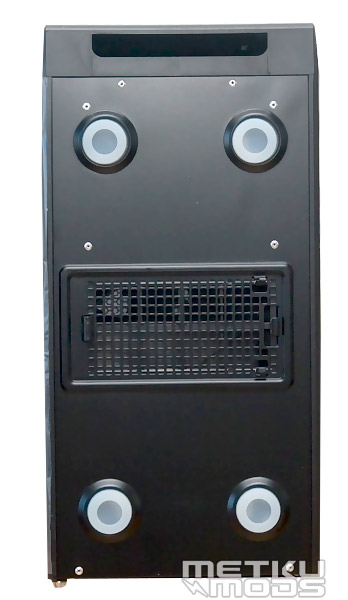
In the bottom there are four soft silicone feet and a third dust filter. Now this filter is in a weird place, because the case has to be opened when one wants to clean the filter. Also the bottom of the front bezel is open to allow less restricted path for cool air to enter the case.
Size comparison with P182
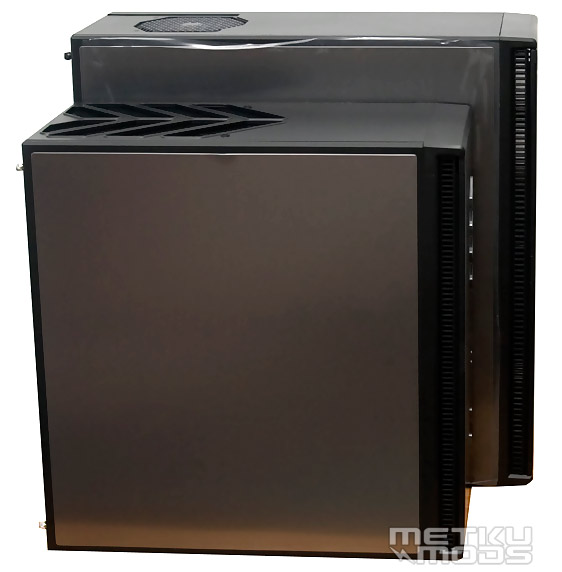
From the side view one can see the size difference compared to the P182 case. Despite the Mini is a good seven centimeters shorter in depth, Antec still claims it can handle even the longest of graphic cards. The difference in height is also around 7 cm. This is a nice improvement, as the P180 is often criticized for being too large. On the other hand the new Mini still has to be one of the largest mATX-cases out there.
 | Pages: 1 2 3 4 5 6 |  |
 Content in english!
 Sisältö suomeksi!